
dialoguer avec le monumental
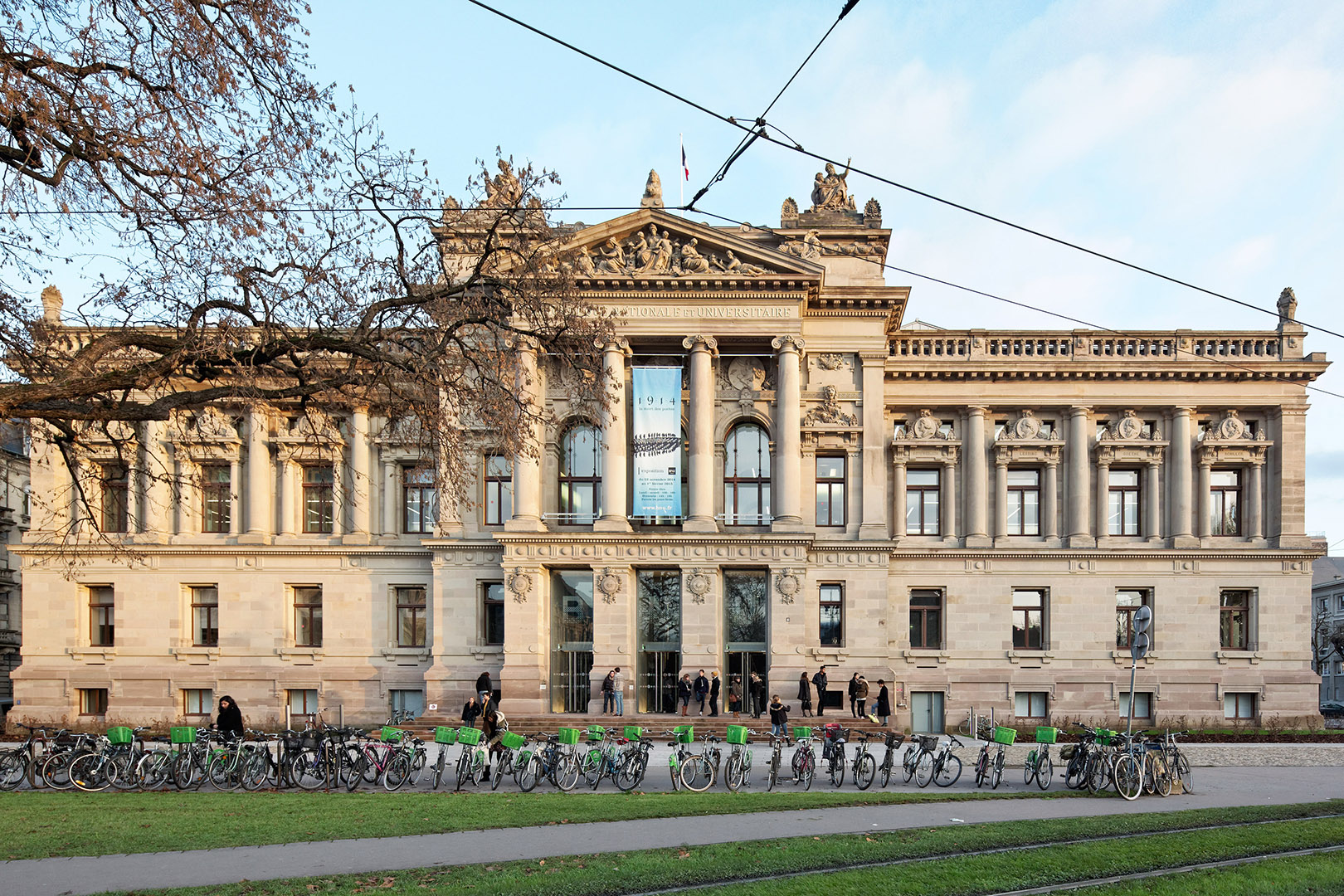
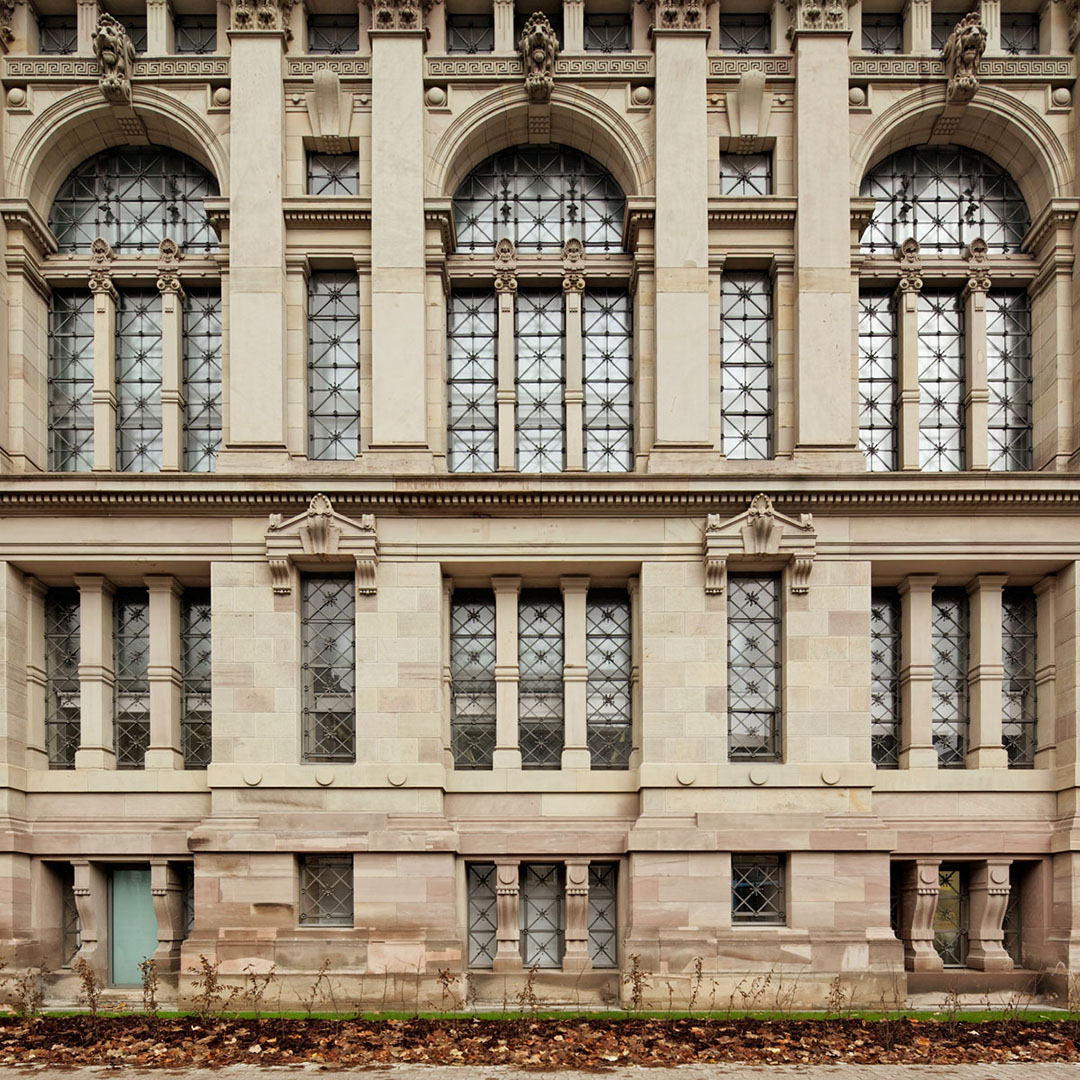
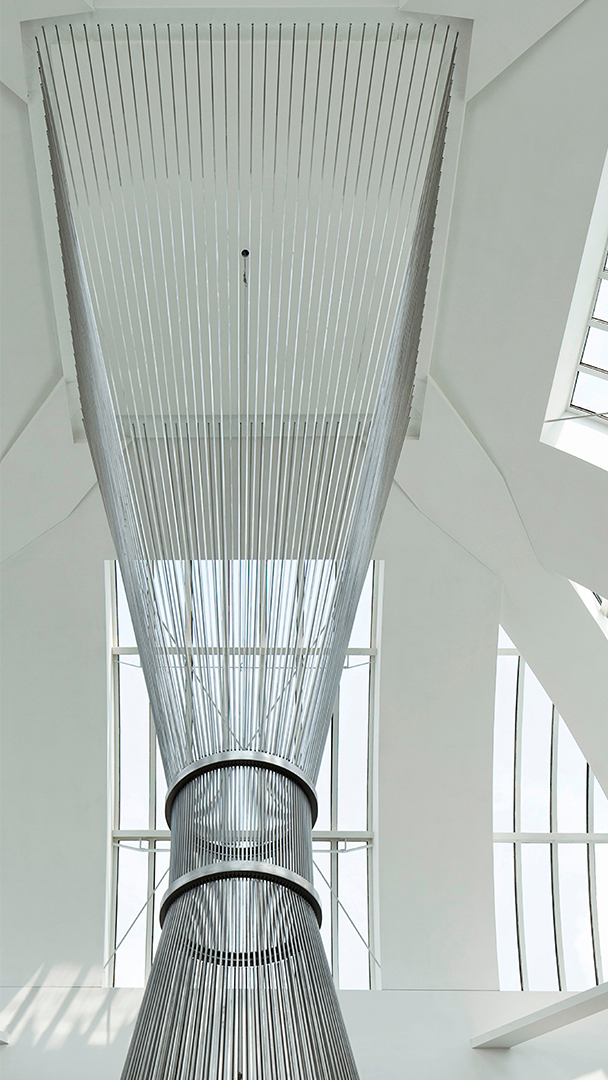
La Bibliothèque Nationale Universitaire de Strasbourg située en cœur de ville est un bâtiment prestigieux datant de la période allemande (1871). L’attitude adoptée pour sa réhabilitation, consiste à respecter scrupuleusement l’architecture monumentale. Ainsi, le projet valorise les modénatures caractéristiques de la façade et magnifie le dôme en le rendant visible depuis tous les niveaux intérieurs.
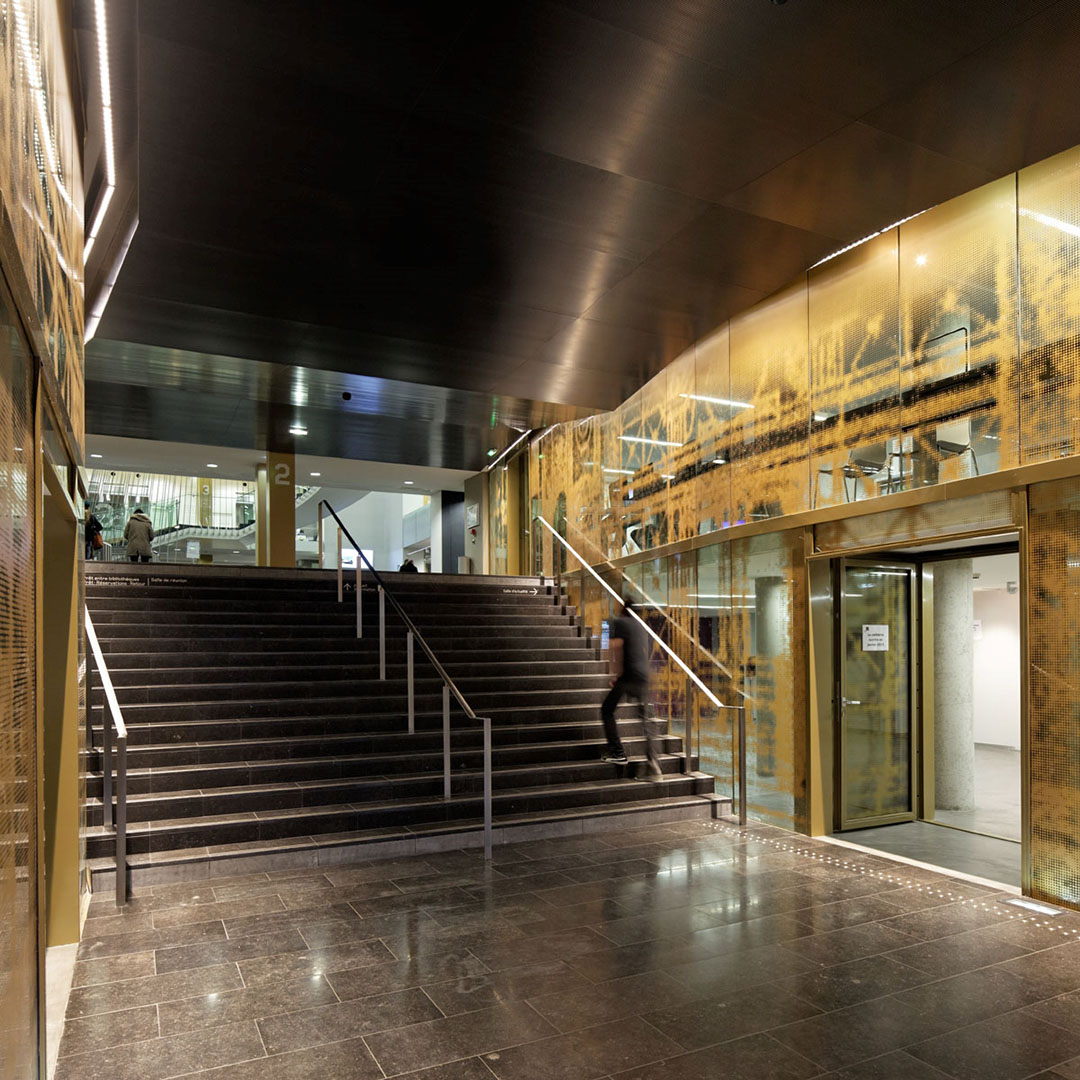
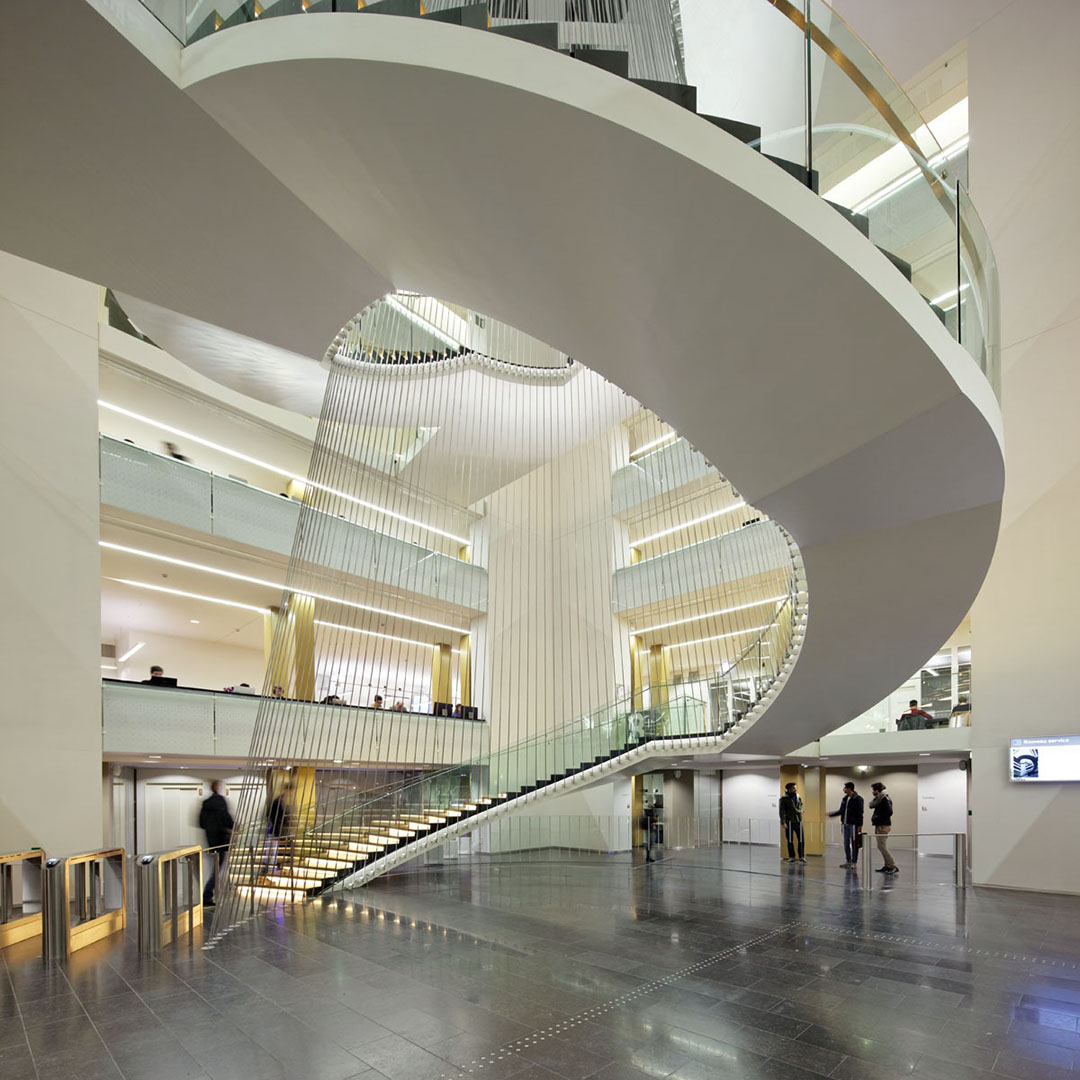
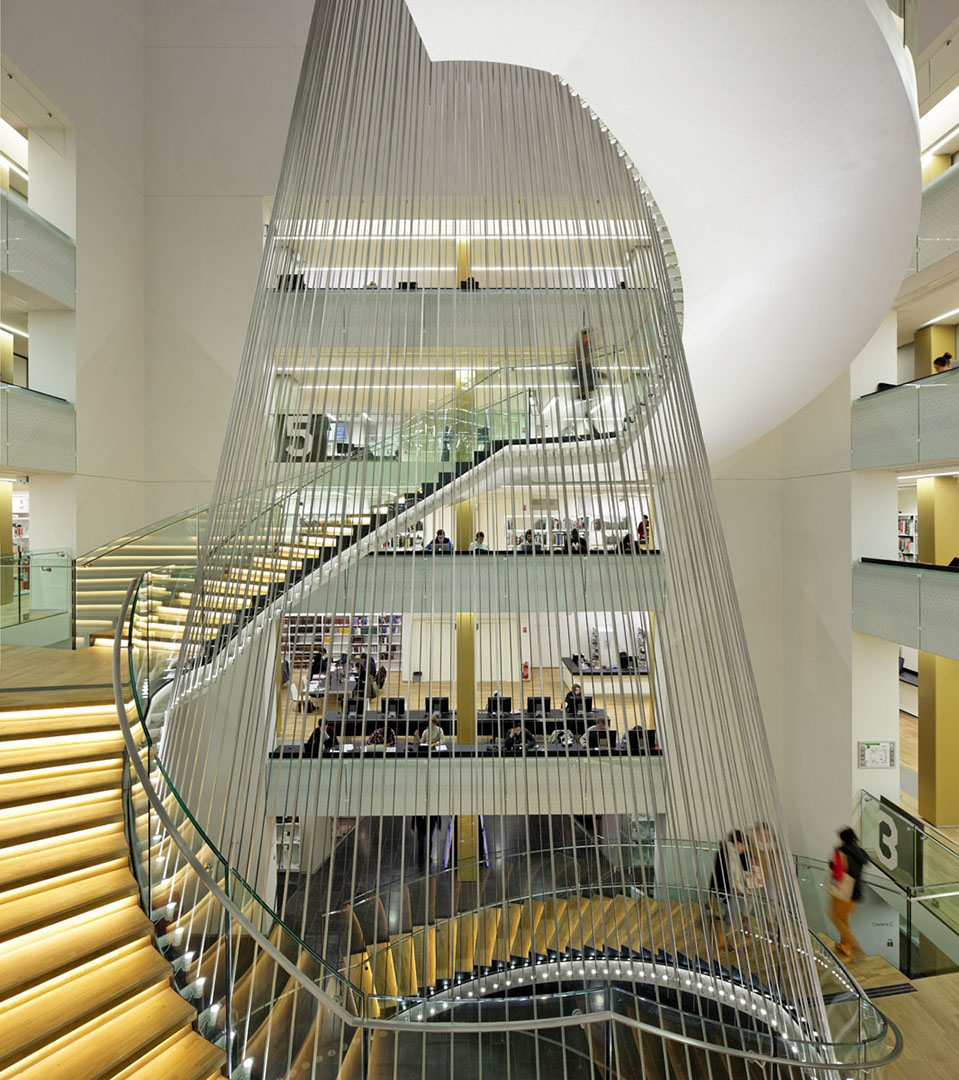
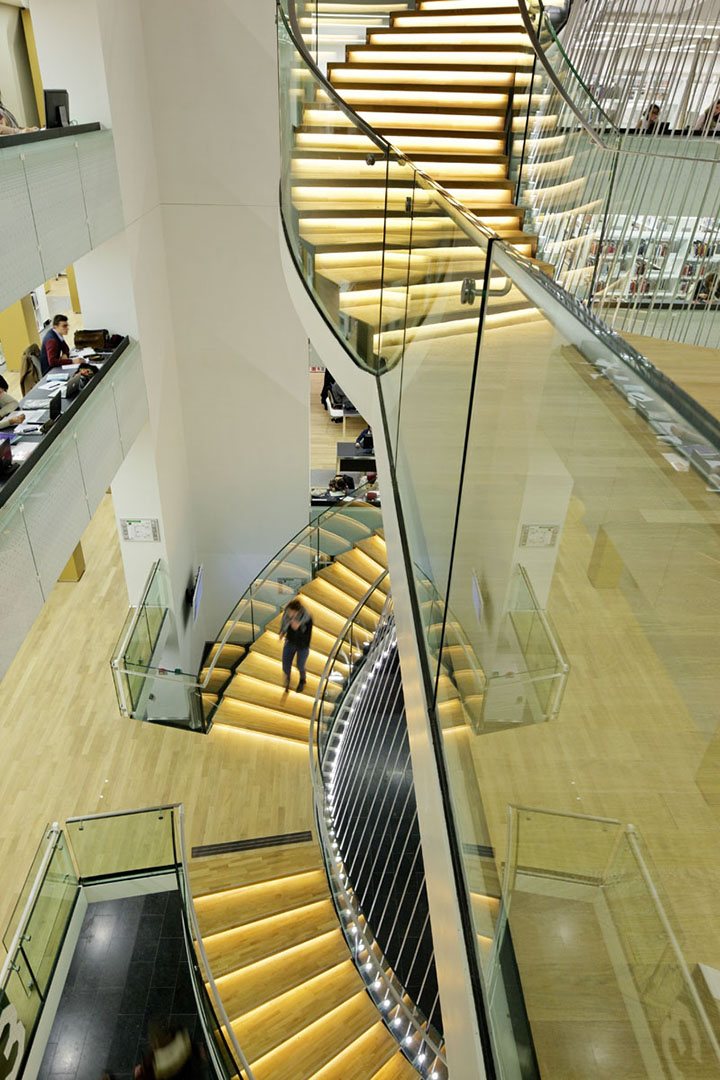
Les nouveaux espaces sont clairement distingués de la structure existante, par l’adoption d’un vocabulaire architectural spécifique. Ainsi les trois espaces principaux – accueil, circulation, lecture – sont traités avec une plasticité marquée qui dialogue avec l’architecture monumentale.
lumière zénithale
et dôme central
L’intervention repose d’une part sur la suppression d’éléments parasites qui gênent la lecture de la qualité des volumes d’origine, et d’autre part, sur la construction de dispositifs de circulations verticales et la création de nouveaux plateaux fonctionnels.
L’objectif des soustractions est de rendre accessible et visible au public, même non-lecteur, le volume exceptionnel sous le dôme qui incarne l’identité de la bibliothèque.
libérer les hauteurs sous plafond
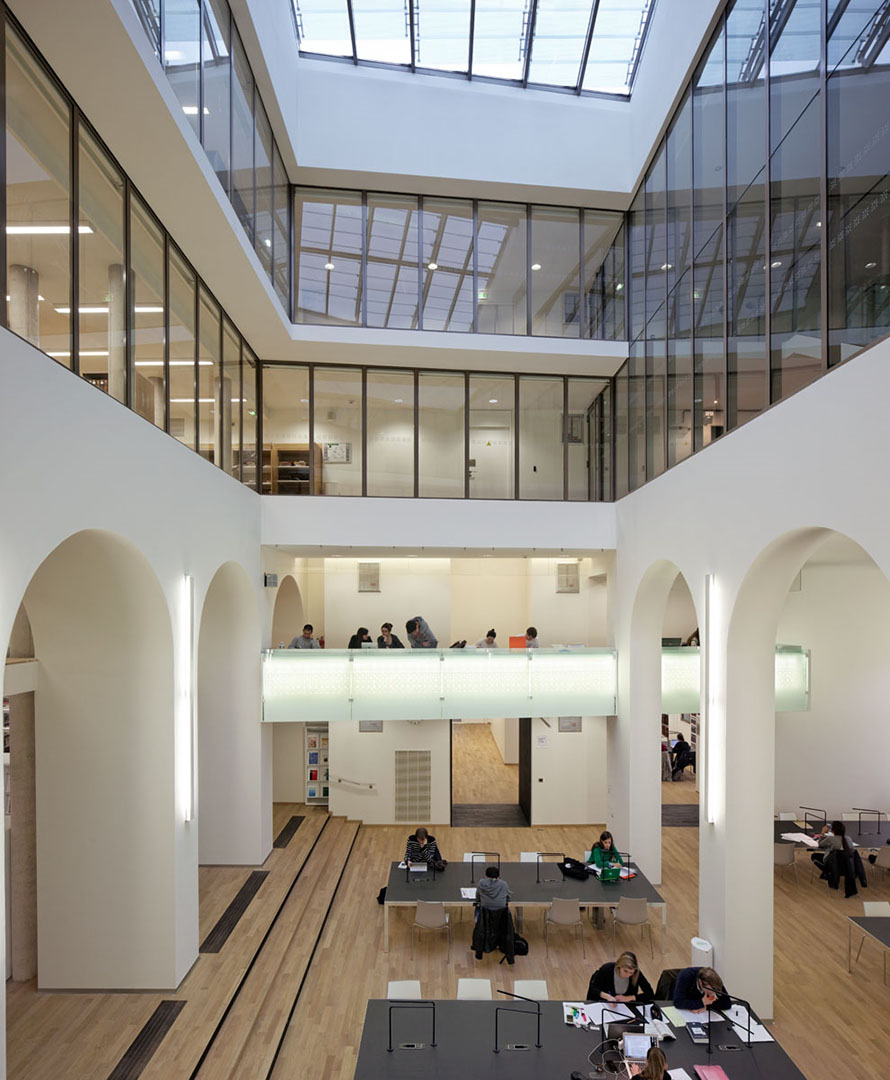
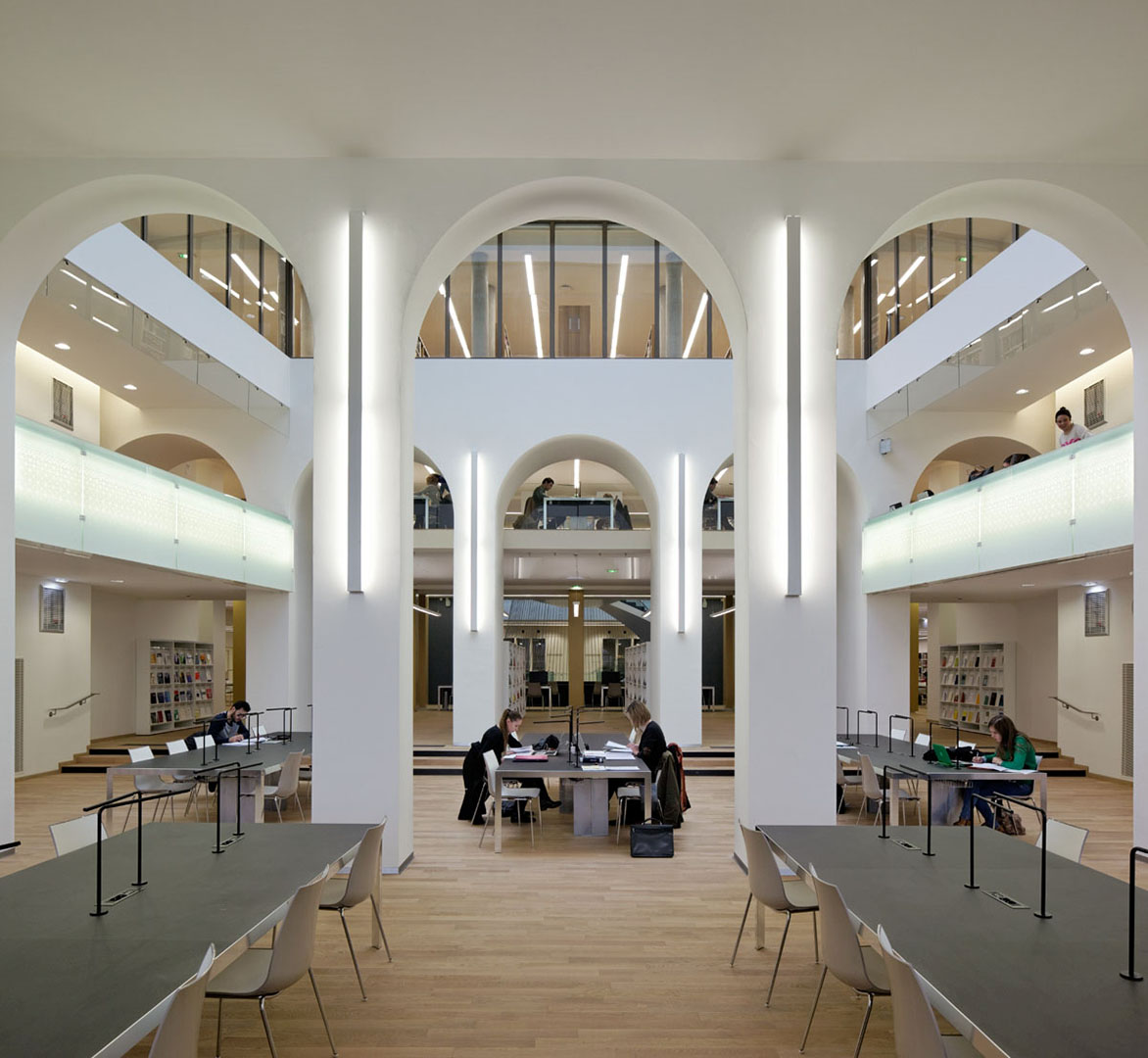
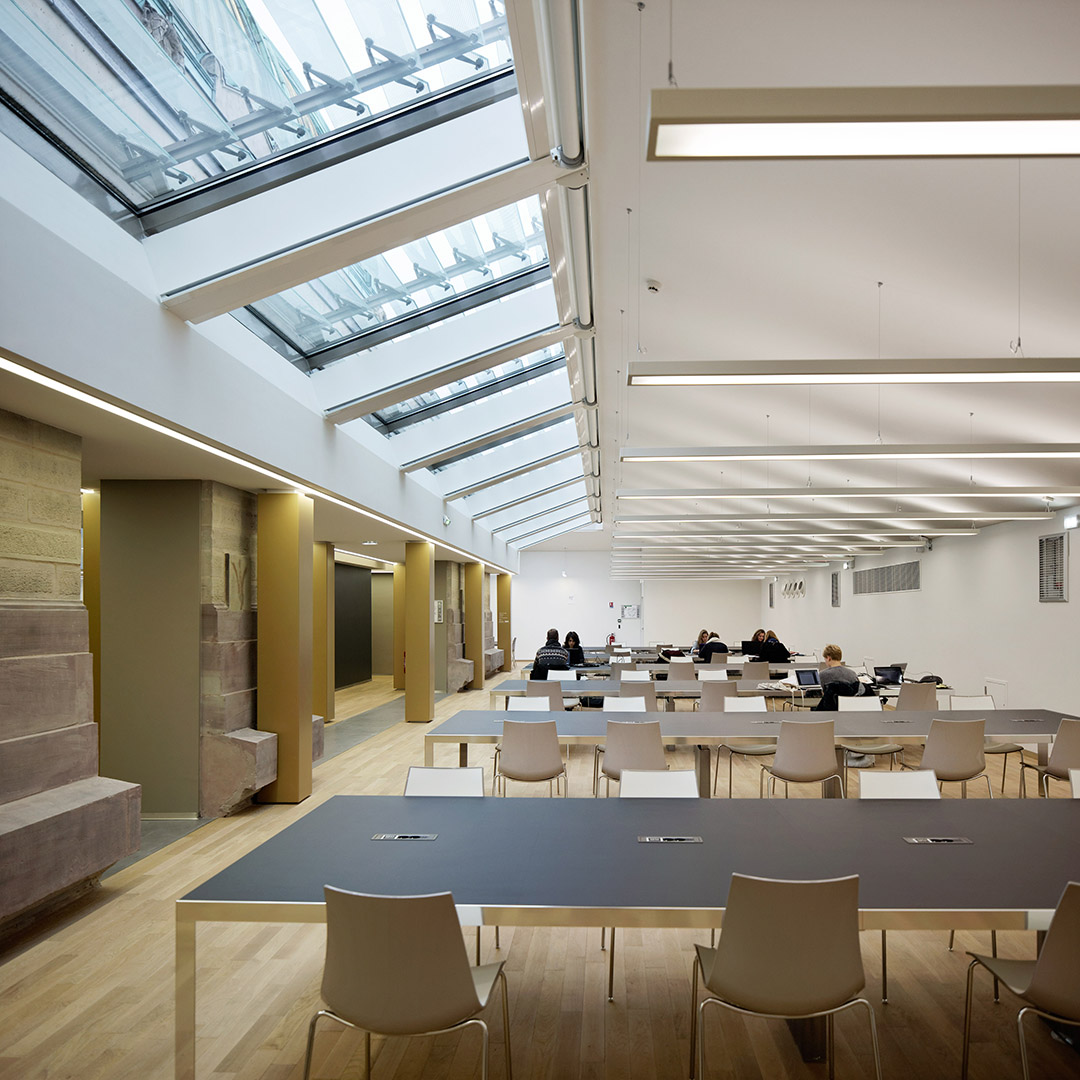
Afin d’offrir un espace dégagé avec une qualité d’ambiance favorisant la lecture, le travail et la convivialité, quatre plateaux sont créés sur le pourtour du grand atrium.
Ce dispositif qui remplace les cinq plateaux actuels, libère des hauteurs sous plafond confortables pour les espaces accessibles aux lecteurs.
circulations verticales
dans les 4 angles
Des noyaux de circulations verticales sont placés aux quatre angles des plateaux créés. Ces angles correspondant aux quatre anciennes cours deviennent des points névralgiques du fonctionnement de la nouvelle bibliothèque. Ils libèrent ainsi des contingences techniques et de sécurité, les volumes majeurs destinés au public.
Cette disposition permet d’assurer un confort d’usage pour le personnel, et un confort visuel pour les grands plateaux publics.
ÉQUIPES PROJET
MAÎTRISE D’ŒUVRE
Architecte : ANMA
Architecte des monuments de France : 2BDM
TCE : OTE
Économie : Michel Forgue
Acoustique : Peutz & Associés
Signalétique : Locomotion
Signalétique : LM Communiquer
Escalier : Greisch
CONCOURS
Valérie Dubois
Brice Chapon
ÉTUDES
Valérie Dubois
Anne Pestel
CHANTIER
Etienne Challet-Hayard
Jean-Jacques Chagnaud
Juliette Chourrout
Alessio Loffredo
FICHE TECHNIQUE
STATUT Réalisé
MAÎTRISE D’OUVRAGE
Ministère de l’Enseignement Supérieur et de la Recherche
CALENDRIER 2014
SURFACE 22 700 m² SHON
TRAVAUX 31,5 M€ HT
PERSPECTIVES Artefactory
PHOTOGRAPHIE Vincent Fillon
CERTIFICATION HQE, Label effinergie
VOIR +
Bordeaux, Halle Boca
Paris, Halle aux Farines
Strasbourg, Logements Rotonde